NEWS

2026

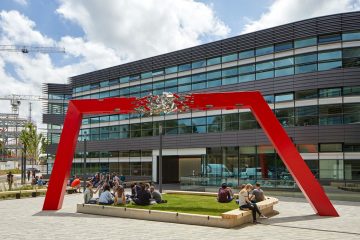
Big Data Institute, University of Oxford

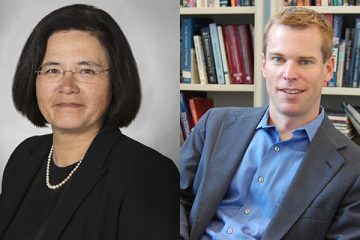
Professor Trey Ideker appointed Director of the Big Data Institute, Nuffield Department of Medicine, University of Oxford (March 9, 2026)  

Professor Trey Ideker has been appointed as the new Director of the University of Oxford’s Big Data Institute (BDI). He will take up the role by June and continue to advance the institute’s mission to drive transformative research into the causes, consequences, prevention and treatment of disease.  
The Big Data Institute brings together researchers from diverse disciplines to harness large, complex, and heterogeneous biomedical data sets that offer unprecedented opportunities to improve human health worldwide.” 
Ellison Medical Institute

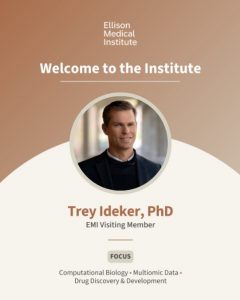
Trey Ideker, PhD is a Visiting Member at the Ellison Medical Institute, Ellison Medical Institute (January 23, 2026)

Welcoming Trey Ideker, PhD, as a Visiting Member at the Institute. A longtime UC San Diego faculty member and leading expert in computational biology, Dr. Ideker will work with our teams to use multiomics data to better understand different disease types and help identify which patients are most likely to benefit from emerging therapies.

We’re excited to see how this collaboration will strengthen our drug discovery and development programs and bring us closer to our mission: delivering more effective, personalized treatments and improving outcomes for our patients.” 

Forbes 30 Under 30, United States 2026

Congratulations to Dr. Clara Hu on joining the Forbes 30 Under 30: Science, Class of 2026, Forbes, January 2026

Related: By The Numbers: Meet The Forbes Under 30 Class Of 2026 by Alexandra York and Zoya Hasan. “A look behind the statistics of the 2026 Under 30 List—from $3.8 billion in funding to 200 million fans online.”

2025

Witthaya Prasongsin—Getty Images

The U.S. just bet $1 billion that AI supercomputers can turn most cancers from ‘death sentences’ to ‘manageable conditions’ within 8 yearsFortune Magazine, Eva Roytburg (October 28, 2025) [View PDF]

“Can we make a massive dent in cancer with AI and big data in the next eight years? Absolutely,” scientist Trey Ideker said. “Is AI alone going to solve cancer? No.”

Called the ‘DREAM complex,’ these proteins may determine how fast humans age, Earth.com, Jordan Joseph, Oct 2, 2025

DREAM complex acts as master brake on DNA repair, where higher activity steadily increases mutations and accelerates aging.

Ludmil Alexandrov and Trey Ideker

UCSD researchers are featured in final teams of international cancer competition, San Diego Union-Tribune, Oct 1, 2025

Ludmil Alexandrov and Trey Ideker are on teams exploring mutational signatures and AI-human collaborations for cancer care. 

UC San Diego Researchers Shortlisted for International Cancer Competition, UC San Diego Today, Miles Martin (Sept 29, 2025) [PDF]

Twelve teams reached the Cancer Grand Challenges finals, including two with UC San Diego scientists. Dr. Ideker’s Team ‘Biologia Ex Machina’ is developing the next generation of AI-powered co-scientists to revolutionize cancer research.  

Human cell illustration. (Image Credit: Corona Borealis Studio/Shutterstock)

This Detailed Map of a Human Cell Could Help Us Understand How Cancer Develops, Discover Magazine, Cody Cottier (May 29, 2025) [PDF

Mapping a human cell gives researchers a view of subcellular architecture and sheds light on how cancer develops

Photo Credit: UC San Diego Health Sciences/University Communications

“Digital Tumors” for Precision Oncology: UC San Diego Receives Award from ARPA-H
UC San Diego Today, Miles Martin (May 22, 2025) [PDF]

Researchers at UC San Diego, led by Professor Trey Ideker, are included in a $142 million initiative from ARPA-H with the goal of creating adaptive and personalized cancer treatments. As part of the new project, Ideker will lead a team developing “digital tumors” to help match patients with the right treatment and predict the evolution of their disease. 

Photo Credit: UC San Diego Health Sciences/University Communications

UCSD team is part of cutting-edge, nationwide cancer program
The San Diego Union-Tribune, Paul Sisson (May 23, 2025) [PDF]

Grants will fund use of artificial intelligence to predict cancer evolution during treatment and better match treatments to disease

ARPA-H ADAPT Program

ARPA-H pioneers game-changing cancer care designed to adapt throughout treatment
ARPA-H News & Events (May 20, 2025) [PDF]

Selected performer teams will use predictive models to match treatments with changing tumor biology and prevent disease progression

Mutations traced to disrupted protein complexes, not just single faulty parts.

Protein Map Illuminates Hidden Drivers of Childhood Cancer
AACR Cancer Discovery News, Elie Dolgin (April 25, 2025) [PDF]

A high-resolution map of how protein organization inside the cell provides a platform for interrogating the way cancer mutations disrupt entire protein assemblies—not just individual genes. By combining spatial proteomics with pediatric tumor genome data, researchers uncovered 102 previously overlooked cancer drivers, highlighting the power of structural context in interpreting cancer genomes and identifying new therapeutic targets.

Photo Credit: Human Protein Atlas

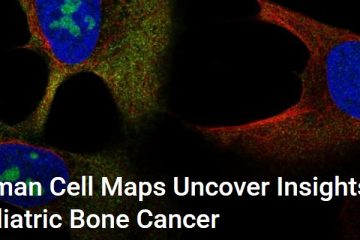
Human Cell Maps Uncover Insights in Pediatric Bone Cancer, Genetic Engineering and Biotechnology News, Apr 10, 2025

Researchers have identified mutated proteins strongly linked to bone cancer by constructing a multimodal map of human subcellular architecture.

[Video] AI Meets Biomedicine: Highlights from the 43rd Barcelona Biomed Conference at IRB Barcelona

The 43rd Barcelona BioMed Conference explores the potential of Artificial Intelligence to transform biomedical research, Institute for Research in Biomedicine | IRB Barcelona, Apr 2, 2025

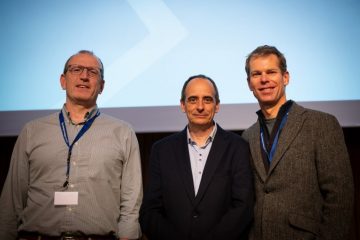
Between 31 March and 2 April, IRB Barcelona, supported by the BBVA Foundation, hosted the 43rd Barcelona BioMed Conference, entitled “AI in Drug Discovery and Biomedicine”. Held in the emblematic Casa de Convalescència in Barcelona, and organized by Dr. Patrick Aloy (IRB Barcelona) and Dr. Trey Ideker (UC San Diego, US), the conference gathered 150 international researchers to explore the potential of artificial intelligence (AI) to transform Drug Discovery.

Photo Credit: Human Protein Atlas

A Comprehensive Map of the Human Cell. UC San Diego Today, Susanne Clara Bard, April 9, 2025

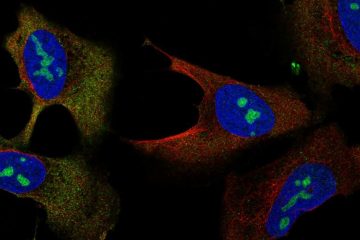
UC San Diego and Stanford University researchers have created a comprehensive map of the human U2OS cell. The map revealed previously unknown functions of proteins including C18orf21 (pictured).

Image credit: Getty Images

Biological aging may not be driven by what we thought, Live Science, Feb 13, 2025

What drives aging? A new study draws a line between random genetic mutations and predictable epigenetic changes used to measure biological aging.

Image credit: SynBioBeta using DALL-E

Epigenetic Clocks May Only Be Scratching the Surface of Aging. SynBioBeta (Jan 21, 2025) [PDF]

UC San Diego researchers uncover a pivotal link between genetic mutations and epigenetic changes, reshaping our understanding of aging

Photo: Zane Koch and Trey Ideker

What makes the biological clock tick? La Jolla scientists link two theories on aging. The San Diego Union-Tribune, La Jolla Light, Ashley Mackin Solomon (Jan 27, 2025) [PDF

UCSD researchers work to pave the way for new therapies to slow or reverse the process. Zane Koch and Trey Ideker are authors of a study out of the UC San Diego School of Medicine on aging. 

Is aging caused by gene expression or mutations? The answer is key to treatment
KPBS Public Media, Thomas Fudge (Jan 27, 2025) [YouTube][PDF]

What do your genes have to do with growing old? Quite a lot. But is it due to the actual DNA, or the way those genes are expressed? KPBS sci-tech reporter Thomas Fudge has more on new research that raises a question that’s key to treating age-related conditions.

Image: Dmytriy (stock.adobe.com)

Is anti-aging science misguided? ‘Reversing’ your biological clock may be out of reach. StudyFinds, Steve Fink (Jan 24, 2025) [PDF]

Findings challenge current anti-aging research focused solely on reversing epigenetic changes, as these changes may be symptoms rather than root causes of aging – making the development of anti-aging treatments more complex than previously thought.

New Study Links Epigenetic Changes to Genetic Mutations. There may be negative implications for epigenetic therapiesLifespan.io, Arkadi Mazin (Jan 21, 2025) [PDF]

A new paper published in Nature Aging suggests that somatic mutations cause significant remodeling of the epigenetic landscape. The findings might be relevant to future anti-aging interventions.

Image credit: UC San Diego Health Sciences/Adobe Firefly

Why Our Biological Clock Ticks: Research Reconciles Major Theories of AgingUC San Diego Today, Miles Martin (Jan 21, 2025) [PDF]

Two major theories of aging both involve DNA, but in very different ways. Researchers at UC San Diego have revealed that these theories may not be so different after all.

Inside the Lab: Researcher Spotlight with Dr. Trey Ideker, UC San Diego, Moores Cancer Center. Izzy Ancharski (Jan 7, 2025) [Vimeo, 15mins

Trey Ideker, PhD, is a 21-year Professor of Medicine, Bioengineering and Computer Science, and former Chief of Genetics, at the University of California San Diego (UCSD). Additionally, he is Director or Co-Director of the Bridge2AI Functional Genomics Data Generation Program, the Cancer Cell Map Initiative, the National Resource for Network Biology, and the UCSD Graduate Program in Bioinformatics and Systems Biology, all NIH-funded efforts. Ideker’s research laboratory has led seminal studies establishing the theory and practice of systems biology, including systematic techniques for elucidating human cell architecture and its molecular networks.

View the complete Researcher Spotlight series HERE 

2024

UC San Diego Ranks 7th in the World for Most Influential Researchers, UC San Diego today, December 4, 2024

Dr. Ideker has been selected as a 2023 Clarivate Highly Cited Researcher, continuing his ongoing nomination since 2019. This highly anticipated annual list identifies researchers who demonstrated significant influence in their chosen field or fields through the publication of multiple highly cited papers during the last decade.  

View the complete list of 2023 Highly Cited Researchers HERE

Image credit: UC San Diego

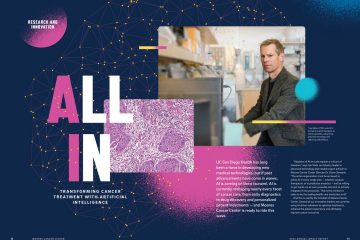
All In. Transforming cancer treatment with artificial intelligence (pgs 12-17)
Delivering Discoveries. Moores Cancer Center Annual Impact Report FY 2024 

UC San Diego Moores Cancer Center is committed to supporting patients at every step of their cancer journey. Through innovative research and compassionate patient care, we strive to change the landscape of cancer prevention, detection, and care in San Diego and beyond. Our inaugural annual report features inspiring patient stories, research breakthroughs, community partnerships and more.

 Read Here

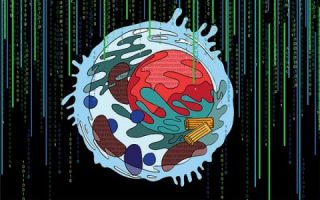
Image credit: UC San Diego Health Sciences, generated with Adobe Firefly

How Artificial Intelligence Could Automate Genomics Research.
UC San Diego Today, Miles Martin (Dec 2, 2024) [PDF]

Functional genomics seeks to identify what genes do and how they interact. Researchers at UC San Diego have demonstrated that large language models such as GPT-4 could make functional genomics research significantly faster and less laborious than current, non-AI approaches. 

See also: Medical Express

Photo credit: iStock/Lillia Bila

$12.7M Grant to Establish New Center to Investigate Genetic Basis of Autism and Schizophrenia
UC San Diego Today, Sara Bock (Oct 10, 2024)

Funded by a California Institute for Regenerative Medicine (CIRM) grant, researchers in the UC San Diego Verge Center aim to uncover the genetic mechanisms behind neuropsychiatric disorders. 

CBS8 News San Diego

UC San Diego School of Medicine uses AI to predict which drugs to use to treat cancer patients
CBS8 News San Diego, Abbie Black (Jan 18, 2024) [PDF] [YouTube]

The team published a study in Cancer Discovery that uses artificial intelligence to predict the best treatment for cancer patients.

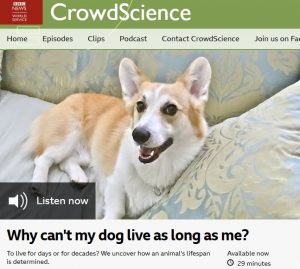
Podcast: BBC Crowd Science

Why can’t my dog live as long as me? To live for days or for decades? We uncover how an animal’s lifespan is determined.

BBC World Service, CrowdScience (Nov 22, 2024)
[Podcast, 29 mins]

Photo credit: Erik Jepsen/UC San Diego

Simulated Chemistry: New AI Platform Designs Tomorrow’s Cancer Drugs
UC San Diego Today, Miles Martin (May 6, 2024) [PDF]

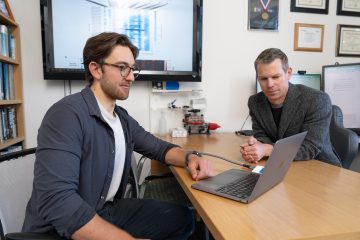
The new platform helped UC San Diego scientists synthesize 32 potential multi-target cancer drugs. Photo: Study co-author Katherine Licon, photographed here at the bench, is lab manager for the Ideker Lab at UC San Diego, which combines computational and traditional wet-lab techniques to answer fundamental questions about disease biology and discover new ways to enhance precision medicine. 

    Image credit: istock.com

    Infusion of Artificial Intelligence in Biology
    The Scientist, Meenakshi Prabhune (Feb 23, 2024) [PDF]

    With deep learning methods revolutionizing life sciences, researchers bet on de novo proteins and cell mapping models to deliver customized precision medicines. As the AI flood gates open, biology is experiencing a surge of new applications. From synthetic proteins to cell mapping, researchers are using AI to improve precision medicines. 

    Machine Learning Models Help Predict Medication Responses
    NIH, National Cancer Institute, Center for Biomedical Informatics and Information Technology (CBIIT) (Feb 5, 2024) [PDF]

    Image credit: Allen Chen/UCSD Guardian, using Dreamstudio

    Scientists use AI to predict when cancer cells will resist chemotherapy
    Interesting Engineering, Sejal Sharma (Jan 18, 2024)

    Photo by Steve Johnson on Unsplash

    AI points to better and new cancer treatments
    Innovators Magazine, Susan Robertson (Jan 18, 2024)

    Credit: BlackJack3D/Getty Images

    AI Uses Tumor Genetics for Prediction of Treatment Response
    Inside Precision Medicine (Jan 18, 2024)

    Photo credit: National Cancer Institute/Unsplash

    AI Harnesses Tumor Genetics to Predict Treatment Response. There are many paths to cancer resistance; AI can decode them all simultaneously.
    UC San Diego Today, Miles Martin (Jan 18, 2024) [PDF]

    Cervical cancer, shown here at the cellular level, frequently resists treatment. The researchers’ machine learning algorithm could help scientists better understand why this and other forms of cancer resist chemotherapy. 

    2023

    Highly-Cited-Researcher-2023-Clarivate

    Jacobs School researchers named most highly cited in the world, Jacobs School of Engineering,  November 17, 2023

    Yet again, 16 faculty and researchers at the UC San Diego Jacobs School of Engineering were named among the world’s most influential in their fields in this year’s Clarivate listing of Most Highly Cited Researchers in the World.

    Forbes 30 Under 30, Class of 2023

    Congratulations to Dr. Yue Qin!

    Dr. Yue Qin has been selected to join the Forbes 30 Under 30, Class of 2023. Read more HERE and HERE. (2023 May 17)

    Dr. Yue Qin has been awarded the 2023 UC San Diego Chancellor’s Dissertation Medal for the Jacobs School of Engineering. (2023 May 10)
    Image provided by NIH Common Fund

    A New Map Reveals the Complicated World in Which Cells Seek to Repair Damaged DNA
    Scott LaFee, UC San Diego Today.  (2023 May 22) [PDF]

    Image: An artistic rendering of the concept of DNA damage and repair. Numerous diseases are linked to or caused by alterations that affect genomic integrity and the ability of cells to function and divide normally. A process called DNA damage response has evolved to repair errors and mutations. Researchers have produced a new map that more fully captures the complexity of that process.

    Image: UC San Diego Today

    Smartly Done. Artificial intelligence is on its way to transforming how we understand and treat disease. 
    UC San Diego Today, Nicole Mlynaryk (2023 May 18) [PDF]

    “The same way your Netflix algorithm predicts what movie you should watch tonight, our algorithms will predict what drug is best fit to treat your cancer”. – Trey Ideker

    Watch on YouTube

    Creating a Meaningful College Experience with Ximena Gonzalez
    University of California Television (UCTV). YouTube. (Jun 29, 2023)

    2022

    NIH NCI Cancer Systems Biology Consortium

    Interview with Dr. Trey Ideker: Mapping the Circuitry of a Cancer Cell, National Cancer Institute (.gov), Nov 24, 2022

    In this interview, Dr. Trey Ideker discusses systems biology and his CSBC research as co-director of the Cancer Cell Map Initiative (CCMI).

    Lucila Ohno-Machado, MD, PhD, is the PI of the Bridge Center’s Administrative and Ethics cores. Trey Ideker, PhD, is the PI of a Data Generation Project called Cell Maps for AI.

    UC San Diego Joins NIH ‘Bridge to Artificial Intelligence’ Program
    UC San Diego Today, Nicole Mlynaryk (September 13, 2022) [PDF]

    The NIH Common Fund’s initiative will expand the use of artificial intelligence to solve pressing challenges in human health. Researchers at University of California San Diego School of Medicine have been selected to lead components of the National Institutes of Health (NIH) Common Fund’s Bridge to Artificial Intelligence (Bridge2AI) program. Over the next four years, Bridge2AI will award $130 million to accelerate the widespread use of AI in biomedical research and health care 

    2022 clarivate banner

    16 Jacobs School researchers among most highly cited in the world, Jacobs School of Engineering, November 22, 2022 

    A remarkable 16 faculty and research scientists at the UC San Diego Jacobs School of Engineering are among the world’s most influential researchers in their fields, according to the 2022 Clarivate listing of Most Highly Cited Researchers in the World. The list highlights individuals at universities, research institutes and commercial organizations who have demonstrated a disproportionate level of significant and broad influence in their field of research.

    Bioengineering, bioinformatics graduate students selected as Siebel Scholars. Jacobs School of Engineering, September 22, 2022

    Yue Qin, Graduate Student in the Ideker Lab, has been honored as a 2023 Siebel Scholar. The Siebel Scholars program recognizes the most talented students in the world’s leading graduate schools of business, computer science, bioengineering and energy science.

    Dr. Trey Ideker is honored to be included in the ISCB 2022 Class of Fellows. 

    The ISCB Fellows program was created to honor members who have distinguished themselves through outstanding contributions to the fields of computational biology and bioinformatics. Begun in 2009, 2022 marks the 13th anniversary of the program. ISCB will be honoring the 2022 Class of Fellows during the annual ISMB 2022 conference. (April 28, 2022) 

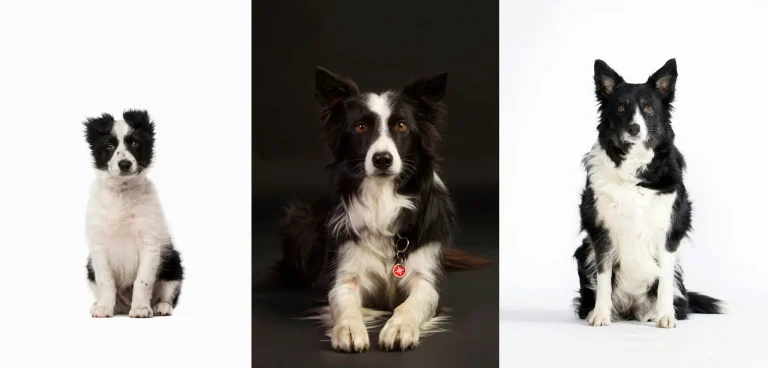
    How old is your dog in human years? New formula is more accurate than multiplying by 7. The Kelly Cutrara Show, Global News Radio 640 Toronto.  (4 Feb 2022)

    Radio interview with Trey Ideker & Kelly Cutrara

    Image courtesy of the Spanish National Cancer Research Center and Massachusetts General Hospital.

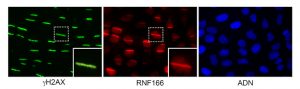
    Scientists develop novel tools to visualize DNA repair.  
    The Science Advisory Board, Monish Makena (4 Jan 2022) 

    Researchers can now visualize DNA repair in unprecedented detail using a new high-throughput microscopy technique in combination with machine learning. The methodology, published in Cell Reports on December 28, has led to the identification of new proteins involved in DNA repair.
    2021

    MuSIC_Multi-Scale_Integrated_Cell_Charlotte_Marquez
    Image Credit: Charlotte Curtis, UC San Diego Health Sciences

    Interview with Dr. Ideker and Yue Qin. Revealing a Cell’s Components through Artificial IntelligenceAZO Life Sciences (23 Dec 2021)

    In this interview, we speak to Professor Trey Ideker and Yue Qin about their latest in cell biology and how artificial intelligence could be used to discover new components within cells.

    classic-cell-v-MuSIC
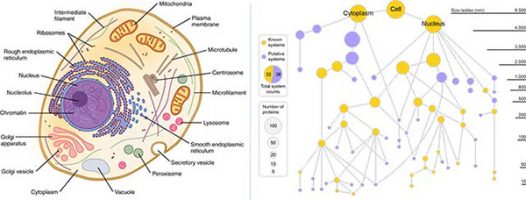
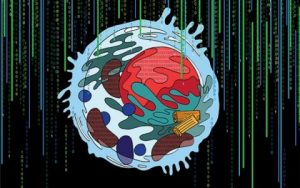
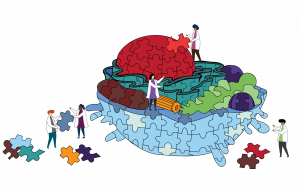
    Classic textbook cell diagrams imply all parts are clearly visible and defined. (Credit: OpenStax/Wikimedia). Right: A new cell map generated by MuSIC technic reveals many novel components.

    AI-Based MuSIC Reveals Previously Unknown Cell Components. GEN (29 Nov 2021)

    The structure of the cell, and its components, have largely been explored through methods such as protein fluorescent imaging and protein biophysical association. Now, researchers have combined microscopy, biochemistry, and artificial intelligence techniques to advance the understanding of the cell by revealing previously unknown cell components…. Multi-Scale Integrated Cell (MuSIC), is described in Nature, in the paper, “A multi-scale map of cell structure fusing protein images and interactions.”

    Multi-Scale Integrated Cell (MuSIC). Image credit: Charlotte Marquez

    What is in our cells?, Healthcare-in-europe.com, Nov 27, 2021

    Most human diseases can be traced to malfunctioning parts of a cell — a tumor is able to grow because a gene wasn’t accurately translated into a particular

    (Iznewton/Wikimedia Commons)
    Photo via Pixabay

    UCSD Finds Technique That Could Boost Mapping of Cell Interiors. Times of San Diego (24 Nov 2021).  See also La Jolla LightPatch

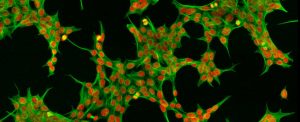
    Using a new artificial intelligence identifying method, researchers at UC San Diego and its collaborators have taken what may turn out to be a significant leap forward in the understanding of human cells, according to a report published Wednesday. The pilot study — which combines microscopy, biochemistry techniques and artificial intelligence in a technique known as Multi-Scale Integrated Cell — revealed around 70 components contained within a human kidney cell line, half of which had never been seen before.

    MuSIC cell structure. Image credit: Charlotte Marquez

    We Might Not Know Half of What’s in Our Cells, New AI Technique Reveals. UC San Diego News Center (24 Nov 2021)

    See also: Phys.OrgNanowerkSciTech DailyScienceDailyThe Medical NewsNeuroscience NewsScience BlogLaboratory Equipment.

    Artificial intelligence-based technique reveals previously unknown cell components that may provide new clues to human development and disease

    Investigators Aim to Identify New Treatment Targets with Cancer Cell Map Initiative. OncLive (16 Nov 2021)

    The Cancer Cell Map Initiative, developed by investigators at the University of California San Francisco and the University of California San Diego, has successfully charted how hundreds of genetic mutations involved in breast cancer and cancers of the head and neck affect the activity of proteins that ultimately lead to disease.

    Dog Years to Human Years: Your Canine’s Lifespan Explained. Newsweek (7 Nov 2021) 

    Whether you’ve got a puppy or an older pooch in your household, it is natural to wonder how to translate their age from dog years to human years. Historically, there have been various myths which claim to have the answer to this equation. One of these suggests that to find out a dog’s age, you simply multiply it by seven to reveal its human equivalent. But, how accurate is this really?

    Studies Delve Deep into the Protein Machinery of Cancer Cells. National Cancer Institute, Cancer Currents Blog (4 Nov 2021) [PDF]

    A team of researchers has used advanced technologies and computational techniques to identify the interactions among proteins that commonly form in head and neck and breast cancer cells. They also created a map of how the interacting proteins—also called protein complexes—function in key communication networks, or pathways, in those cells. 

    Technology Networks (Oct 2021)

    Uncovering Key Interactions Between Cancer-Driving Proteins, Technology Networks, Oct 19 2021

    The CCMI aims to transform the field of cancer drug discovery by uncovering the molecular networks underlying the disease.

    Uncovering Key Interactions Between Cancer-Driving Proteins. Laura Elizabeth Lansdowne, Technology Networks (12 Oct 2021) [PDF]

    UC San Diego ‘Cancer Cell Mapping’ Research May Improve Chemotherapy. Times of San Diego (2 Oct 2021)

    Researchers at UC San Diego and UC San Francisco have mapped out how hundreds of mutations involved in two types of cancer affect the activity of discrete groups of proteins that are the ultimate actors behind the disease, reports published Friday revealed. The work points the way to identifying new precision treatments that may skirt side effects common with much current chemotherapy.

    The effort, dubbed Cancer Cell Mapping Initiative, is led by Trey Ideker, professor at UCSD School of Medicine and Moores Cancer Center, and Nevan Krogan, director of the Quantitative Biosciences Institute at UCSF, who are co-senior authors on a set of three related studies that describe the map.

      Image credit: Charlotte Curtis

      From COVID to cancer, gene-mapping tool could ‘revolutionize’ treatment, UCSF studies say. Danielle Echeverria, San Francisco Chronicle (2 Oct 2021) [PDF]

      New research by UCSF and UC San Diego scientists involving techniques also deployed to fight COVID-19 has the potential to revolutionize cancer treatment by creating opportunities for more precision treatments, they say — which can be far less harmful than chemotherapy.

      The collaborative effort — called the Cancer Cell Map Initiative — found that mapping the protein disruptions caused by DNA mutations, rather than just the mutations themselves, is very useful for grouping different kinds of cancer-causing mutations together. That opens up the opportunity to create precision treatments that can target groups of mutations, rather than just one.

      On Thursday, the group released three papers in the journal Science describing how the maps work for breast cancer and cancers of the head and neck.

      Clinical Omics (Oct 2021)

      In-Depth Cancer Protein Mapping Project Sheds Light on Disease Processes, Clinical Omics, Oct 1, 2021

      An in-depth project mapping cancer-causing gene mutations to their encoded proteins and also tracking protein-protein interactions in cancer has allowed University of California scientists to gain new insight into the complex mechanisms of this disease, using head and neck cancer and breast cancer as specific examples.

      Published as three papers in the current issue of Science and led by researchers Trey Ideker, University of California San Diego (UCSD), and Nevan Krogan, University of California San Francisco (UCSF), the project used proteomic mass spectrometry and also computer-based data integration to map linked proteins found in cancer cells. They also used a statistical model of mutation to assess which proteins are “under strong mutational selection and in which cancer types,” explain the authors.

      Looking Beyond DNA to See Cancer with New Clarity, UCSF News Room, By Robin Marks, September 30, 2021

      Mapping How Mutated Proteins Interact Reveals Previously Unseen Drug Targets. Researchers at UC San Francisco and UC San Diego have mapped out how hundreds of mutations involved in two types of cancer affect the activity of proteins that are the ultimate actors behind the disease. The work points the way to identifying new precision treatments that may avoid the side effects common with much current chemotherapy.

      See also: 

      SciTech Daily (Apr 2021)

      COVID-19: Scientists Identify Human Genes That Fight SARS-CoV-2 Infection, SciTech Daily, April 16, 2021

      Research pinpoints interferon stimulating genes that control SARS-CoV-2 replication.

      Scientists at Sanford Burnham Prebys have identified a set of human genes that fight SARS-CoV-2 infection, the virus that causes COVID-19. Knowing which genes help control viral infection can greatly assist researchers’ understanding of factors that affect disease severity and also suggest possible therapeutic options. The genes in question are related to interferons, the body’s frontline virus fighters.

      The study was published in the journal Molecular Cell.

      "Old Dogs, New Research and the Secrets of Aging." New York Times (Nov 9, 2020)

      2020

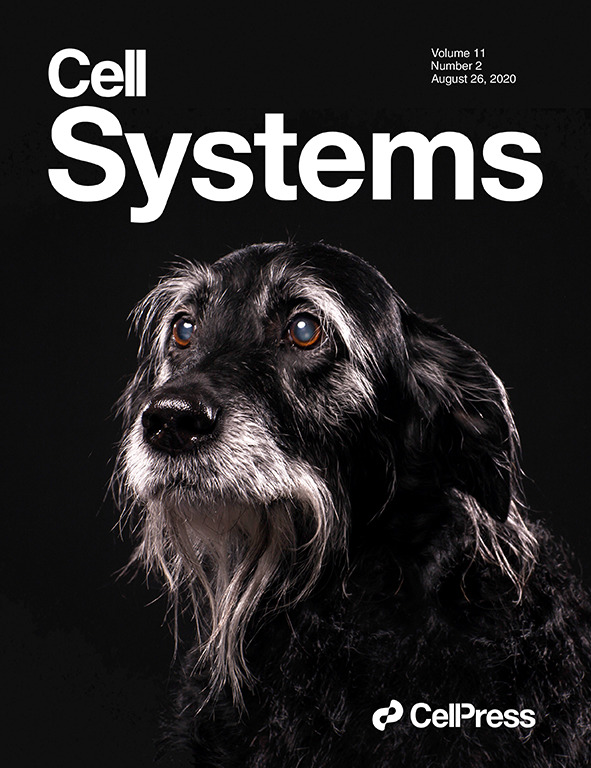
      "Quantitative Translation of Dog-to-Human Aging by Conserved Remodeling of the DNA Methylome." Wang, et al. Cell Systems. 2020
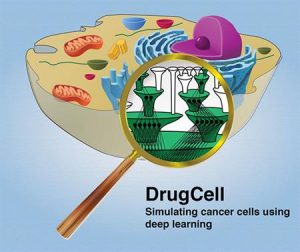
      DrugCell: New Experimental AI Platform Matches Tumor to Best Drug Combo. UC San Diego researchers use artificial intelligence to predict best approach to treating cancer(Oct 2020)

      2019

      "Cracking Open the Black Box of AI with Cell Biology" IEEE Spectrum. (Mar 13, 2018)

      2018

      San Diego Union Tribune interview with Dr. JP Shen. "Gene Editing Approach Uncovered Cervical Cancer’s Weak Spots" (March 22, 2017)

      2017

      2016

      "People Who Are HIV-Positive May Be Aging Faster Than Their Peers" NPR (April 26, 2016)

        2015

        2014

        • Don’t judge every tumor by its tissue, scientists say, Julia Rosen, Los Angeles Times, 7 Aug (2014)
        • Tumor Suppressor Mutations Alone Don’t Explain Deadly Cancer, Jacobs School of Engineering (August 1, 2014)
          • Although mutations in a gene dubbed “the guardian of the genome” are widely recognized as being associated with more aggressive forms of cancer, physicians and bioengineers at the University of California, San Diego School of Medicine have found evidence suggesting that the deleterious health effects of the mutated gene may in large part be due to other genetic abnormalities, at least in squamous cell head and neck cancers. The study, published online Aug. 3 in the journal Nature Genetics, shows that high mortality rates among head and neck cancer patients tend to occur only when mutations in the tumor suppressor gene coincide with missing segments of genetic material on the cancer genome’s third chromosome.
        2013

        2012

        2011

        2010

        2009

        2008

        2007

        2006

        2005

        2004 and prior